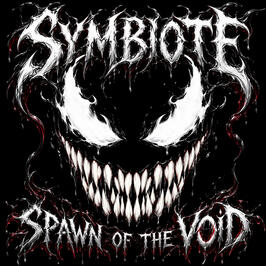
Symbiote Spawn of the Void
Introduction
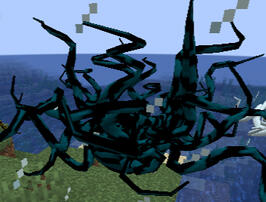
Symbiote Spawn of the Void is a minecraft 1.20.1 mod that aims to add a variety of symbiotes to the world of minecraft. Each symbiote has different personalities, purposes, and even varying strengths and weakenesses. The goal of this mod is to make the Symbiotes feel alive within minecraft, If you are interested in following the development of this Mod You can join the discord!.Here are the currently added features:
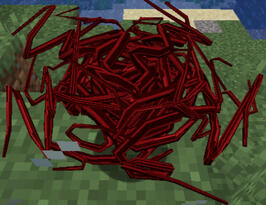
Multiple Tentacle Types (attack, movement, defense[shoving], etc)Symbiote Messages (based on achievements)Meteors - randomly occurring event, a meteor will fall from the sky and 1-3 symbiotes will crawl out of it. Meteor’s internal color hints what came out(dark green for Guardian, dark red for predator, gold for royal, white for negative meteors[far rarer than other types])
Sometimes the meteor will contain a dormant cocoon which can be extracted for a sym sample or broken to awaken the symbioteRoyal meteors will gather other wild symbiotes nearby to allow the royal symbiote to consume them when it breaks out of the meteorSymbiote vials
Observation chamber - place a filled vial into a block that displays the contained symbiote floating inside while showing its phenotype, name, health, personality, Bond potential, weaknesses, and other biological information
Vial Injector - a machine that lets the player deliberately begin the normal 7 second bonding process with the symbiote inside instead of releasing it onto the ground first. The symbiote can still reject the player where applicableVials - Used to contain symbiotes, chance of cracking when containing strong/high potential symbiotes
Reinforced vials - Reinforced containment vials made using meteor core materials will safely hold anythingSample extraction - a contained symbiote can periodically produce a biological sample without consuming the actual symbiote. Samples could become the basis of most advanced craftingKill mobs to gain bond, the higher strength the mob = more bond gainedItems:
Symbiote Scanner - point it at a wild or hosted symbiote to identify its name, phenotype, host, health, hunger, aggression, growth level, and whether it previously belonged to a playerMeteor Detector - Starts pulsing when a meteor event is going to occur nearby. Higher tiers could display approximate direction and impact distance
Advanced Meteor Detector - gives phenotype,range, direction, and countdownRoyal Sigil - Crafted from Royal symbiote biological material. Royals react positively to it, weaker wild symbiotes hesitate around the holder, but Predators/ Anomalies may view the player as a challengeSymbiote Nutrient Pack - Emergency food that restores symbiote Hunger directly. Natural prey would still be a better food source, but this gives players a way to prevent starvation-driven takeovers during long expeditionsBond Catalyst - Rare meteor-derived material that doesn’t simply give free bond; instead it temporarily increases Bond/trust gains from feeding, demands, combat survival, and traveling together.Villager meat - used by the existing symbiote bad-food/forced-eating sequenceTinte Uru Flame - manifested Luxumbra materialWeapons:
Thermal Lance - The opposite specialized anti-symbiote weapon, exploiting heat weaknesses without making ordinary Minecraft fire universally overpoweringSonic Disruptor - A limited-use defensive item capable of forcing hostile symbiote tentacles to retract temporarily. This would interact strongly with symbiotes such as Veyl that already have sonic weaknessesLuxumbra Hard-Light Blade → temporary Luxumbra combat weapon.Blocks:
Incubation Tank - Place biological samples or a dormant meteor cocoon inside and slowly cultivate a new wild Symbiote Mass. The phenotype could depend on ingredients rather than being completely randomContainment Field - Creates a short radius field that wild symbiotes cannot leave. Useful for laboratories, zoos, testing phenotype interactions, or safelySymbiote Research Terminal - Gradually fills out a permanent in-game encyclopedia as the player encounters, scans, bonds with, hosts, or observes each phenotype. This would eventually make this wiki’s information available directly inside MinecraftSymbiote Transfer Chamber - Put a filled vial in one side and a mob in the chamber to let the symbiote perform its normal phenotype-specific host-entry animation on thatThere are currently a couple of ways to get rid of a bonded symbiote, you can either utilize Bells being 4-6 bells and ring them and your symbiote will detach from you and wander off. Or you can utilize the command /symbiote release which just deletes the symbiote from off of you.If you fire a gun or do anything that causes your symbiote to hate you, it will refuse to rebond back to you no matter what.More coming soon
+Developers/Contributors+
Phobetor. Modeler
Jester, Modeler
AiroShean, Owner/Coder
PoisonShear, DEV/texture
CrCrow, Advertiser
Lillith, Wiki DEV
AtlasCloud, Tentacle DEV
PhenoTypes
Meteors
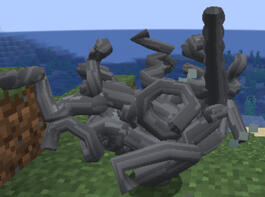
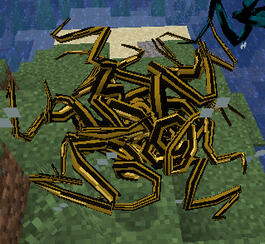
Meteor — Symbiote Impact Event: Occasionally a black meteor visibly falls from high in the sky, leaves a particle trail, impacts with a loud explosion, creates a small crater, and cracks open after several seconds. One to three Symbiote Masses crawl out.Meteor — Phenotype Cores: The meteor's internal color could hint at what came down: dark green/black for Guardian, dark red for Predator, gold for Royal, purple-black glitching particles for Anomalies. Negative meteors should be much rarer than other meteors.Meteor — Dormant Cocoon: Instead of immediately spawning a symbiote, some meteors contain a pulsing cocoon. Breaking it awakens the symbiote, while carefully extracting it gives the player a Dormant Symbiote Sample.Meteor — Anomaly Impact: Extremely rare corrupted meteors temporarily cause broken-texture purple/black particles, warped sounds, flickering nearby blocks, and spawn an Anomalies symbiote with increased starting size.Meteor — Royal Meteor: Very rare gold-veined meteor containing a Royal. Nearby weaker wild symbiotes could gather around the crater before it opens, almost as though they can sense what is inside. And then will let the royal eat them to grow its mass.
Variants
This is a placeholder for now, Symbiote images will be going here and when you click on them it will take you to their page
Guardians are Protective and generally cooperative symbiotes. Guardians tend to prefer bonding over unnecessary violence and are considered the most dependable phenotype. They are naturally defensive, highly attentive to their hosts, and often form strong bonds built on trust and mutual protection. Guardians are more willing than other phenotypes to defend villagers, weaker creatures, and even unfamiliar individuals when they are threatened. While they can become aggressive when their host or those under their protection are endangered, they generally avoid conflict unless it is necessary.
Predators are aggressive hunting symbiotes built around speed, combat, pursuit, and consuming prey. Predators possess strong instincts to chase, overwhelm, and feed on living creatures, making them far more likely to initiate fights with creatures, villagers, and other symbiotes. As they consume more prey, they can grow stronger, faster, and increasingly difficult to control. While some Predators can form loyal bonds with their hosts, their natural hunger and violent instincts make them considerably more dangerous than other phenotypes, especially as they continue to feed and evolve.
Royal's are powerful and exceptionally rare symbiotes that naturally sit above most others within the symbiote hierarchy. Royals possess greater physical strength, durability, and overall potential, allowing them to overpower and dominate weaker symbiotes with relative ease. Many Royals can exert a commanding presence over other symbiotes, influencing or forcing weaker individuals to obey them. Their personalities and behavior vary heavily between individual variants, with some being calm and protective while others are highly dominant, prideful, or dangerous. Because of their rarity and natural superiority, Royals are often treated as high-ranking or influential members of the symbiote population.
Anomalies are unstable and abnormal symbiotes that do not conform to the traits or behaviors of standard bloodlines. Anomalies are typically larger, tougher, and physically more distorted, often possessing elongated, irregular, or chaotic tendrils that reflect their unstable nature. Their bodies may develop unusual features not commonly seen in other phenotypes, making them easily recognizable. Their behavior is highly unpredictable and volatile, with some displaying sudden changes in aggression, instincts, or temperament. Because of their abnormal biology and inconsistent behavior, Anomalies are often difficult to understand, control, or classify.